Santorini & Crete
Caldera · Seafood · Ancient Sites
Estimated budget
£19k
2 travellers · full trip
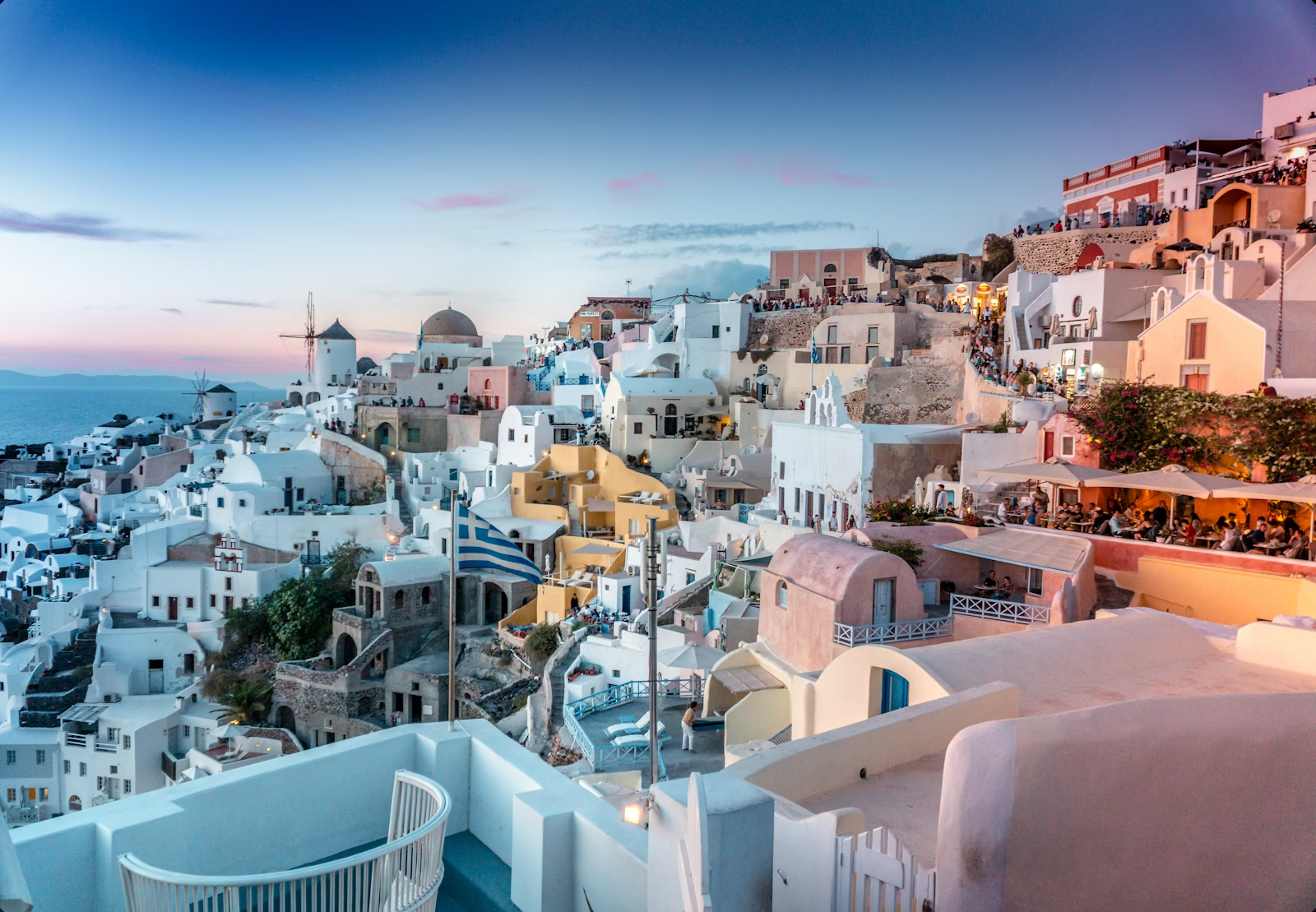
Ten days across the two poles of the Aegean. Begin in Santorini: five nights in Oia above the caldera, where the volcanic drama never stops — the sunsets that turn the white walls gold and pink, the sailing catamarans to hot springs, the wine from vines grown in ash. Then south to Crete: five nights in Elounda at a villa on the bay, where history layers up from Minoan to Venetian to Ottoman and the food is the best in Greece. The seafood meze at a taverna above Heraklion port, the Minoan palace at Knossos before the coach parties, the Cretan mountain villages that have changed nothing in 300 years. Two islands. Ten days. The Aegean at its most essential.
Estimated budget
Estimated budget
From
£18,600
Estimates in GBP for two people. Final pricing depends on dates, availability, and preferences.
Santorini
5 nights in Santorini · Greece
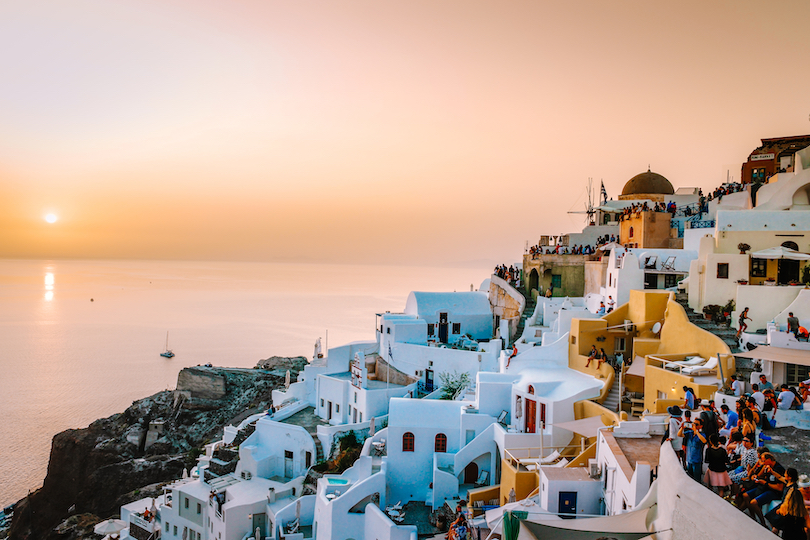
Santorini is the consequence of a volcanic catastrophe that destroyed Minoan civilization 3,600 years ago. What was left is the caldera — a 12km crater full of sea, with white villages on the rim above. The sunsets are as good as the photographs. Go in September when the light has shifted and the crowds have started to thin.
Where you're staying
Day 1
Arrival — caldera first evening
Arrive, find the terrace, look at the caldera for thirty minutes without speaking. The rest follows naturally.
Santorini Airport
Canaves Oia, Oia Village
The road north to Oia from the airport passes through the caldera interior — the first views of the volcanic walls and the sea below announce the island correctly.
Oia sunset — private terrace
The Oia sunset is a 40-minute geological event — the caldera walls face west, the volcanic rock amplifies the light, and the white village facades turn gold, copper, and deep pink in a sequence the photographs never quite capture.
Canaves Oia, Santorini
Dinner — Lauda at Canaves Oia
The hotel restaurant is the right dinner on Night 1 — caldera view, Greek seafood at its finest, and no navigation required.
Canaves Oia, Oia Village
Day 2
Oia village & Assyrtiko wine tasting
Walk Oia in the morning before the heat and the tourists. In the afternoon, a private tasting at the winery that defines Santorini wine.
Oia village walk — early morning
Oia is the most-photographed village in the Aegean — whitewashed lanes carved into a caldera cliff, blue-domed churches, the volcanic sea 300 metres straight down.
Oia, Santorini
Private tasting — Domaine Sigalas winery
Santorini Assyrtiko is unlike any other white wine — the volcanic ash the vines grow in produces a grape with electric minerality and a briny, saline finish that tastes like the Aegean itself.
Oia, Santorini
Day 3
Sailing the caldera — hot springs & hidden coves
The whole day on a private catamaran. The hot springs at Palea Kameni, the red-sand beach, lunch on deck, the caldera from water level looking up.
Private catamaran — caldera full day
Seeing the caldera from the water changes everything — the white villages of Oia and Fira are perched 300 metres above you on the crater rim, and the sea between is a deep volcanic blue unlike anywhere else in the Aegean.
Athinios Port → Caldera, Santorini
Onward to Heraklion, Crete
Santorini
Athinios Port, Santorini
Heraklion, Crete
Heraklion Port, Crete
The Blue Star ferry through the southern Aegean takes 4.5 hours. The crossing between Ios and Crete is where the sea becomes properly dramatic — deep blue, the islands appearing and disappearing.
Santorini
5 nights in Santorini · Greece
Santorini is the consequence of a volcanic catastrophe that destroyed Minoan civilization 3,600 years ago. What was left is the caldera — a 12km crater full of sea, with white villages on the rim above. The sunsets are as good as the photographs. Go in September when the light has shifted and the crowds have started to thin.
Where you're staying
Day 1
Arrival — caldera first evening
Arrive, find the terrace, look at the caldera for thirty minutes without speaking. The rest follows naturally.
Santorini Airport
Canaves Oia, Oia Village
The road north to Oia from the airport passes through the caldera interior — the first views of the volcanic walls and the sea below announce the island correctly.
Oia sunset — private terrace
The Oia sunset is a 40-minute geological event — the caldera walls face west, the volcanic rock amplifies the light, and the white village facades turn gold, copper, and deep pink in a sequence the photographs never quite capture.
Canaves Oia, Santorini
Dinner — Lauda at Canaves Oia
The hotel restaurant is the right dinner on Night 1 — caldera view, Greek seafood at its finest, and no navigation required.
Canaves Oia, Oia Village
Day 2
Oia village & Assyrtiko wine tasting
Walk Oia in the morning before the heat and the tourists. In the afternoon, a private tasting at the winery that defines Santorini wine.
Oia village walk — early morning
Oia is the most-photographed village in the Aegean — whitewashed lanes carved into a caldera cliff, blue-domed churches, the volcanic sea 300 metres straight down.
Oia, Santorini
Private tasting — Domaine Sigalas winery
Santorini Assyrtiko is unlike any other white wine — the volcanic ash the vines grow in produces a grape with electric minerality and a briny, saline finish that tastes like the Aegean itself.
Oia, Santorini
Day 3
Sailing the caldera — hot springs & hidden coves
The whole day on a private catamaran. The hot springs at Palea Kameni, the red-sand beach, lunch on deck, the caldera from water level looking up.
Private catamaran — caldera full day
Seeing the caldera from the water changes everything — the white villages of Oia and Fira are perched 300 metres above you on the crater rim, and the sea between is a deep volcanic blue unlike anywhere else in the Aegean.
Athinios Port → Caldera, Santorini
Onward to Heraklion, Crete
Santorini
Athinios Port, Santorini
Heraklion, Crete
Heraklion Port, Crete
The Blue Star ferry through the southern Aegean takes 4.5 hours. The crossing between Ios and Crete is where the sea becomes properly dramatic — deep blue, the islands appearing and disappearing.
Heraklion, Crete
5 nights in Heraklion, Crete · Greece
Crete is the largest Greek island and the most complex. It has been occupied by Minoans, Mycenaeans, Romans, Byzantines, Arabs, Venetians, and Ottomans — all of them left something. The food is the best in Greece. The mountains in the south are wild. The Elounda bay in the north is the most beautiful coastline in the Mediterranean.
Where you're staying
Day 6
Ferry arrival — Elounda bay
Four hours on the ferry from Santorini. Arrive, swim, eat grilled fish.
Athinios Port, Santorini
Heraklion Port, Crete
The Aegean crossing from Santorini to Crete — 4.5 hours in first-class cabin. The sea changes character between the islands: from caldera blue to the deep Libyan navy.
Blue Palace — arrival and first swim
The Elounda bay in September is warm, clear, and nearly empty.
Elounda Bay, Crete
Day 7
Knossos with a real archaeologist
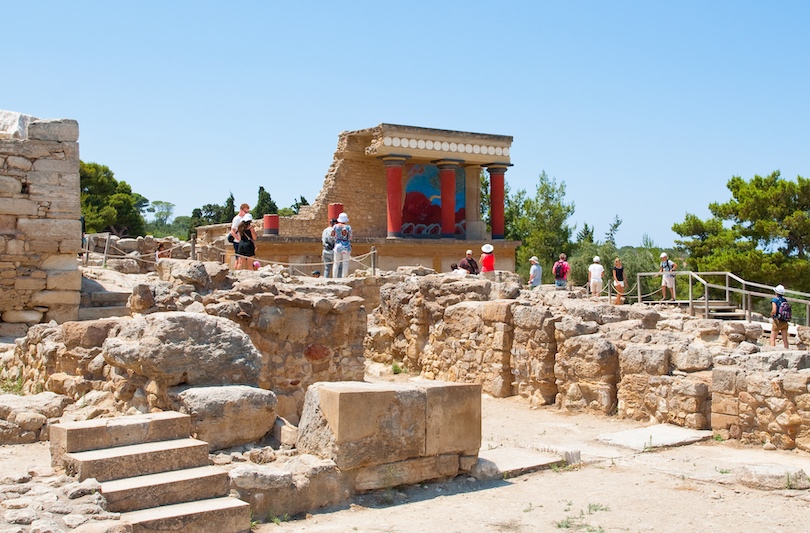
The Minoan palace at Knossos before the coach parties, guided by an archaeologist who has worked the site for 20 years.
Private boat — Spinalonga island
The former Ottoman fortress and Venice leper colony, abandoned in 1957 — UNESCO candidate, visible from the hotel across the bay.
Elounda Bay → Spinalonga Island
Knossos Palace — private archaeology tour
Knossos is the largest Bronze Age site in the Aegean — 3,600 years old, excavated since 1900.
Knossos, Heraklion Prefecture
Heraklion market & seafood lunch
The 1866 covered market in central Heraklion is the most Cretan thing in Heraklion — honey, herbs, olive oil, cheese, and at the far end, a taverna serving whatever came off the boat that morning.
1866 Market, Heraklion
Heraklion, Crete
5 nights in Heraklion, Crete · Greece
Crete is the largest Greek island and the most complex. It has been occupied by Minoans, Mycenaeans, Romans, Byzantines, Arabs, Venetians, and Ottomans — all of them left something. The food is the best in Greece. The mountains in the south are wild. The Elounda bay in the north is the most beautiful coastline in the Mediterranean.
Where you're staying
Day 6
Ferry arrival — Elounda bay
Four hours on the ferry from Santorini. Arrive, swim, eat grilled fish.
Athinios Port, Santorini
Heraklion Port, Crete
The Aegean crossing from Santorini to Crete — 4.5 hours in first-class cabin. The sea changes character between the islands: from caldera blue to the deep Libyan navy.
Blue Palace — arrival and first swim
The Elounda bay in September is warm, clear, and nearly empty.
Elounda Bay, Crete
Day 7
Knossos with a real archaeologist
The Minoan palace at Knossos before the coach parties, guided by an archaeologist who has worked the site for 20 years.
Private boat — Spinalonga island
The former Ottoman fortress and Venice leper colony, abandoned in 1957 — UNESCO candidate, visible from the hotel across the bay.
Elounda Bay → Spinalonga Island
Knossos Palace — private archaeology tour
Knossos is the largest Bronze Age site in the Aegean — 3,600 years old, excavated since 1900.
Knossos, Heraklion Prefecture
Heraklion market & seafood lunch
The 1866 covered market in central Heraklion is the most Cretan thing in Heraklion — honey, herbs, olive oil, cheese, and at the far end, a taverna serving whatever came off the boat that morning.
1866 Market, Heraklion
Ready to make this yours?
Tell us your dates, who's travelling, and what matters most. We'll shape this blueprint around you — then our concierge team handles every booking, every detail.