Kyoto & Osaka
Temples · Kaiseki · Whisky Bars
Estimated budget
£17k
2 travellers · full trip
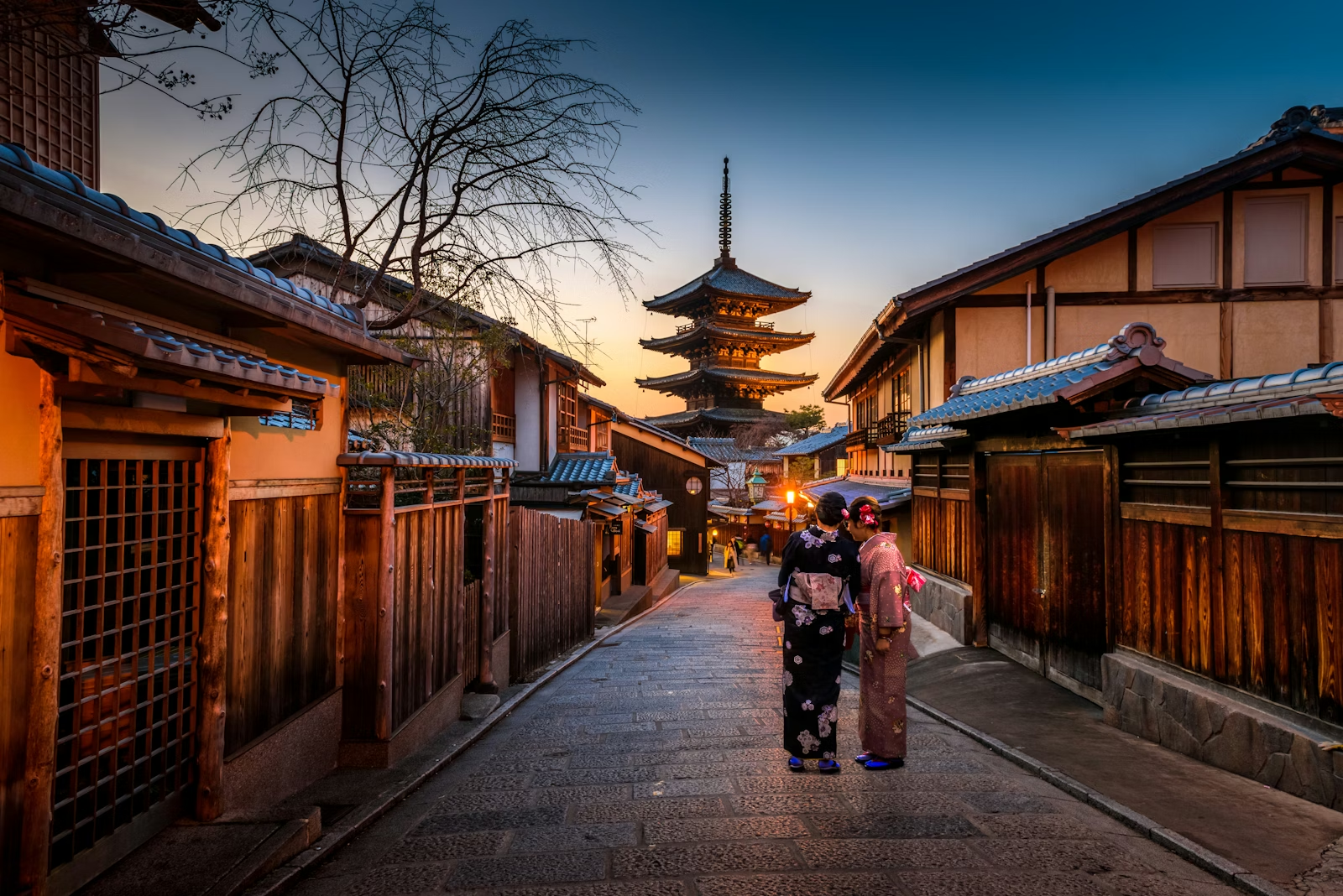
Eight days between two Japanese cities that seem to agree on nothing and complete each other perfectly. Kyoto: five nights of ancient precision — private dawn temple access, a fourth-generation Nishijin weaver, the kaiseki form taken to its limit at Nakamura. Then west to Osaka: three nights of organised hedonism — the izakaya alleys of Hozenji Yokocho, a yakitori master in Shinsekai, Dotonbori at midnight after a whisky flight at the bar that doesn't advertise. Kyoto teaches you to be still. Osaka teaches you to eat.
Estimated budget
Estimated budget
From
£16,600
Estimates in GBP for two people. Final pricing depends on dates, availability, and preferences.
Kyoto
5 nights in Kyoto · Japan
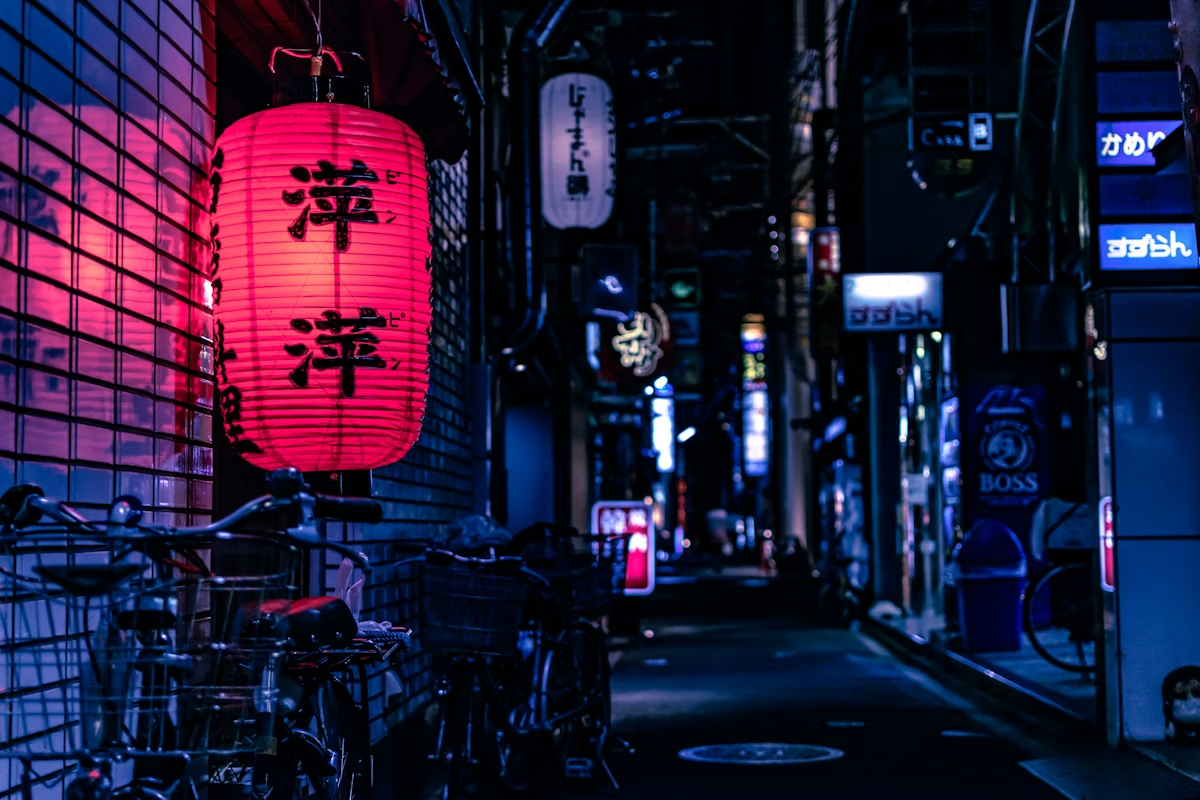
Kyoto in November is autumn leaves on temple rooftops, cold mornings, and the particular quality of afternoon light that makes the gardens look like paintings. Five days is the right duration — enough to go past the famous places and into the ones that aren't on maps.
Where you're staying
Day 1
Arrival — Aman forest & Nakamura
Arrive and give the forest time to do its work. Dinner at Nakamura tonight — a 460-year-old kaiseki house.
Dinner — Nakamura Honten
Nakamura has been serving kaiseki in Kyoto since 1570.
Nishiki, Nakagyo-ku
Day 2
Kinkaku-ji at dawn & Nishijin weaver
The Golden Pavilion before the world arrives, then a private weaving studio in the afternoon. Two very different Kyotos.
Kinkaku-ji — private pre-dawn access
Aman Kyoto has a relationship with the Kinkaku-ji temple that allows pre-dawn garden access before public opening.
Kinkaku-ji, Kita-ku
Private visit — Nishijin weaving atelier
Fourth-generation silk obi weaver.
Nishijin, Kamigyo-ku
Dinner — Pontocho alley, kaiseki omakase
Pontocho is a narrow alley beside the Kamo River — lantern-lit, a metre wide, lined with the finest small restaurants in Kyoto.
Pontocho, Nakagyo-ku
Day 3
Arashiyama & private incense ceremony
November in Arashiyama is the bamboo grove with autumn maple overhead. In the afternoon, an incense ceremony that makes the tea ceremony seem loud.
Arashiyama Bamboo Grove — autumn morning
The Arashiyama bamboo grove in autumn leaf season is a combination of verticalities — bamboo columns green, maple canopy burning orange and red overhead.
Arashiyama, Ukyo-ku
Private kodo (incense ceremony) — Yamada Matsu
Yamada Matsu has been producing incense for the imperial court since 1781.
Muromachi, Kyoto
Bar K6 — Kyoto whisky
Bar K6 stocks 300 Japanese whiskies in a six-stool room.
Shinkyogoku, Nakagyo-ku
Onward to Osaka
Kyoto
Kyoto Station
Osaka
Shin-Osaka Station
Kyoto to Osaka is 14 minutes on the Hikari. The distance is 75km. The psychological distance is considerably greater.
Kyoto
5 nights in Kyoto · Japan
Kyoto in November is autumn leaves on temple rooftops, cold mornings, and the particular quality of afternoon light that makes the gardens look like paintings. Five days is the right duration — enough to go past the famous places and into the ones that aren't on maps.
Where you're staying
Day 1
Arrival — Aman forest & Nakamura
Arrive and give the forest time to do its work. Dinner at Nakamura tonight — a 460-year-old kaiseki house.
Dinner — Nakamura Honten
Nakamura has been serving kaiseki in Kyoto since 1570.
Nishiki, Nakagyo-ku
Day 2
Kinkaku-ji at dawn & Nishijin weaver
The Golden Pavilion before the world arrives, then a private weaving studio in the afternoon. Two very different Kyotos.
Kinkaku-ji — private pre-dawn access
Aman Kyoto has a relationship with the Kinkaku-ji temple that allows pre-dawn garden access before public opening.
Kinkaku-ji, Kita-ku
Private visit — Nishijin weaving atelier
Fourth-generation silk obi weaver.
Nishijin, Kamigyo-ku
Dinner — Pontocho alley, kaiseki omakase
Pontocho is a narrow alley beside the Kamo River — lantern-lit, a metre wide, lined with the finest small restaurants in Kyoto.
Pontocho, Nakagyo-ku
Day 3
Arashiyama & private incense ceremony
November in Arashiyama is the bamboo grove with autumn maple overhead. In the afternoon, an incense ceremony that makes the tea ceremony seem loud.
Arashiyama Bamboo Grove — autumn morning
The Arashiyama bamboo grove in autumn leaf season is a combination of verticalities — bamboo columns green, maple canopy burning orange and red overhead.
Arashiyama, Ukyo-ku
Private kodo (incense ceremony) — Yamada Matsu
Yamada Matsu has been producing incense for the imperial court since 1781.
Muromachi, Kyoto
Bar K6 — Kyoto whisky
Bar K6 stocks 300 Japanese whiskies in a six-stool room.
Shinkyogoku, Nakagyo-ku
Onward to Osaka
Kyoto
Kyoto Station
Osaka
Shin-Osaka Station
Kyoto to Osaka is 14 minutes on the Hikari. The distance is 75km. The psychological distance is considerably greater.
Osaka
3 nights in Osaka · Japan
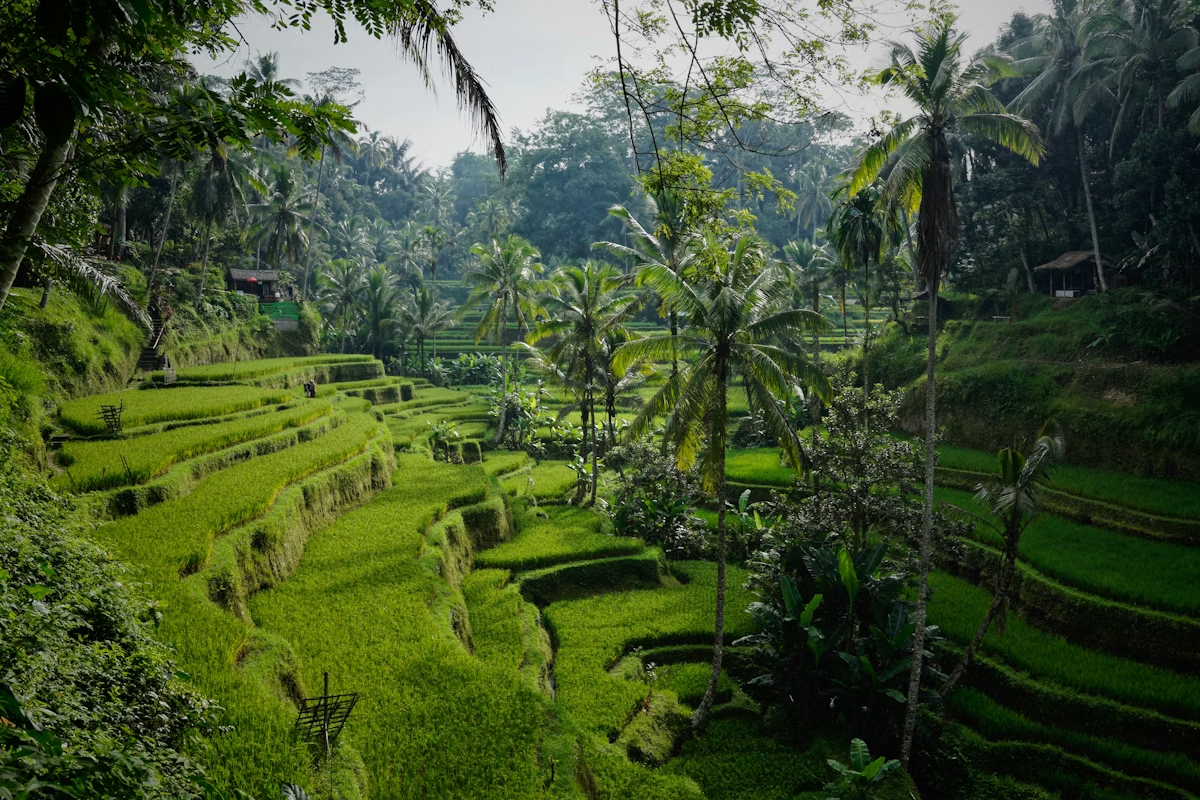
Osaka has a saying: kuidaore — eat until you drop. It is not a warning. The city exists at a different frequency from Kyoto — louder, faster, more comfortable with itself. Three nights is right: enough to eat through Dotonbori, find the izakaya alley they have not put on Instagram yet, and stand at the counter of a yakitori master.
Where you're staying
Day 6
Arrive Osaka — Dotonbori at night
Kyoto to Osaka in 14 minutes by shinkansen. Arrive, check in, and go directly to Dotonbori. The contrast will recalibrate everything.
Kyoto Station
Shin-Osaka Station
The shinkansen between Kyoto and Osaka is the world's most civilised 14 minutes — gliding between two cities that couldn't be more different in character. Kyoto is temple courtyards and ceremony; Osaka is neon, octopus, and the loudest food scene in Japan. The transition happens in the time it takes to finish a coffee.
Kuromon Ichiba Market — afternoon walk
Kuromon Ichiba is Osaka kitchen — 580 metres of stalls selling wagyu, fresh seafood, takoyaki ingredients, and every form of skewered food.
Nipponbashi, Osaka
Dotonbori canal — evening food walk
Dotonbori is the most concentrated food street in Japan.
Dotonbori, Chuo-ku
Day 7
Yakitori master & whisky flight
A slower Osaka day — the Osaka castle park in the morning, then the evening devoted entirely to eating and drinking well.
Osaka Castle Park — autumn morning walk
Osaka Castle was the seat of Toyotomi Hideyoshi — the general who unified Japan in the 1580s after a century of civil war.
Chuo-ku, Osaka
Lunch — Il Ristorante, Niko Romito at Bvlgari
Niko Romito has three Michelin stars in Italy.
Bvlgari Hotel Osaka, Midosuji
Hozenji Yokocho — evening izakaya crawl
Hozenji Yokocho is a cobblestone alley of small restaurants alongside a mossy Buddhist shrine.
Hozenji Yokocho, Namba
Bar Nayuta — Japanese whisky bar
Nayuta has the most serious Yamazaki and Hakushu collection in Osaka — including pre-2010 distillates that have not existed at retail price in a decade.
Shinsaibashi, Osaka
Osaka
3 nights in Osaka · Japan
Osaka has a saying: kuidaore — eat until you drop. It is not a warning. The city exists at a different frequency from Kyoto — louder, faster, more comfortable with itself. Three nights is right: enough to eat through Dotonbori, find the izakaya alley they have not put on Instagram yet, and stand at the counter of a yakitori master.
Where you're staying
Day 6
Arrive Osaka — Dotonbori at night
Kyoto to Osaka in 14 minutes by shinkansen. Arrive, check in, and go directly to Dotonbori. The contrast will recalibrate everything.
Kyoto Station
Shin-Osaka Station
The shinkansen between Kyoto and Osaka is the world's most civilised 14 minutes — gliding between two cities that couldn't be more different in character. Kyoto is temple courtyards and ceremony; Osaka is neon, octopus, and the loudest food scene in Japan. The transition happens in the time it takes to finish a coffee.
Kuromon Ichiba Market — afternoon walk
Kuromon Ichiba is Osaka kitchen — 580 metres of stalls selling wagyu, fresh seafood, takoyaki ingredients, and every form of skewered food.
Nipponbashi, Osaka
Dotonbori canal — evening food walk
Dotonbori is the most concentrated food street in Japan.
Dotonbori, Chuo-ku
Day 7
Yakitori master & whisky flight
A slower Osaka day — the Osaka castle park in the morning, then the evening devoted entirely to eating and drinking well.
Osaka Castle Park — autumn morning walk
Osaka Castle was the seat of Toyotomi Hideyoshi — the general who unified Japan in the 1580s after a century of civil war.
Chuo-ku, Osaka
Lunch — Il Ristorante, Niko Romito at Bvlgari
Niko Romito has three Michelin stars in Italy.
Bvlgari Hotel Osaka, Midosuji
Hozenji Yokocho — evening izakaya crawl
Hozenji Yokocho is a cobblestone alley of small restaurants alongside a mossy Buddhist shrine.
Hozenji Yokocho, Namba
Bar Nayuta — Japanese whisky bar
Nayuta has the most serious Yamazaki and Hakushu collection in Osaka — including pre-2010 distillates that have not existed at retail price in a decade.
Shinsaibashi, Osaka
Ready to make this yours?
Tell us your dates, who's travelling, and what matters most. We'll shape this blueprint around you — then our concierge team handles every booking, every detail.